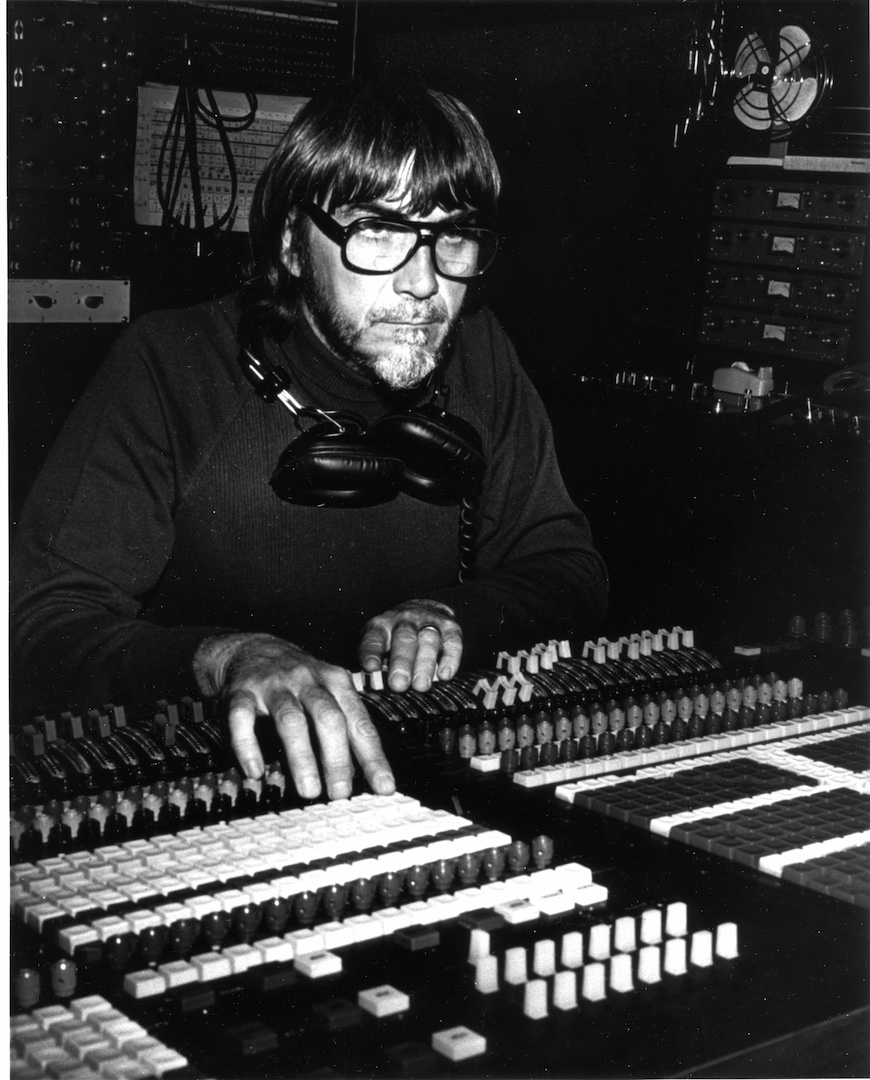
The year was 1958, and the landscape of American sound was trapped in the limitations of mono. Music was a flat, two-dimensional experience until a man named Tom Dowd walked into an Atlantic Records studio and decided to change the physics of sound itself. While most people remember the icons who stood in front of the microphone, the true architect of the golden age of rock and soul was the quiet mastermind behind the mixing console. Tom Dowd did not just record music; he engineered the very way the world would hear it for the next several decades.
Before Tom Dowd introduced the world to multi-track recording, musicians were forced to play as a single, cohesive unit. If one person missed a note or a drummer stumbled, the entire take was ruined, demanding perfect, exhausting performances. Dowd, drawing on his secret past as a physicist for the Manhattan Project, saw a different path. He introduced the 8-track recorder to the recording studio, a move that felt like witchcraft to the artists of the era. Suddenly, instruments could be layered, voices could be smoothed, and the sonic depth of a record became a canvas waiting for a painter. This invention was the literal bridge between the raw, messy energy of early Jukebox hits and the polished, cinematic perfection of modern production.
Think of the legendary tracks that defined the 1960s and 70s. The soaring, intricate melodies of Cream, the gospel-drenched power of Aretha Franklin, and the rhythmic precision of The Allman Brothers Band were all nurtured under the watchful eye of Tom Dowd. He was the calm in the center of the storm, often managing the explosive egos of rock stars while simultaneously re-wiring the circuitry of his custom-built consoles. Without his technical foresight, the complexity of Atlantic Records’ most famous releases would have remained impossible to capture on vinyl.
Yet, the life of a genius is rarely simple. Behind the scenes of these pristine tracks were long, grueling hours in dimly lit studios, clouded by the haze of cigarette smoke and the mounting pressure of the industry. Tom Dowd understood that music was not just math; it was emotion. He knew when to push an artist to their limit and when to let the imperfections stand, believing that a slight tremor in a vocal take was often where the soul lived. His ability to balance the cold logic of engineering with the burning passion of an artist is exactly why his influence echoes through every digital studio today.
As we look back at the era of Walkmans and the rising dominance of FM radio, it is easy to forget that the sounds we cherish were once impossible dreams. Tom Dowd didn’t just leave behind a catalog of hits; he left a blueprint for the future of audio. Every time we hear the clean separation of a guitar riff or the punchy depth of a drum kit, we are listening to the legacy of a man who refused to accept the status quo. His story remains a haunting reminder that behind every anthem that shaped our lives, there is often a hidden mastermind, crafting the soundtrack of history one track at a time.