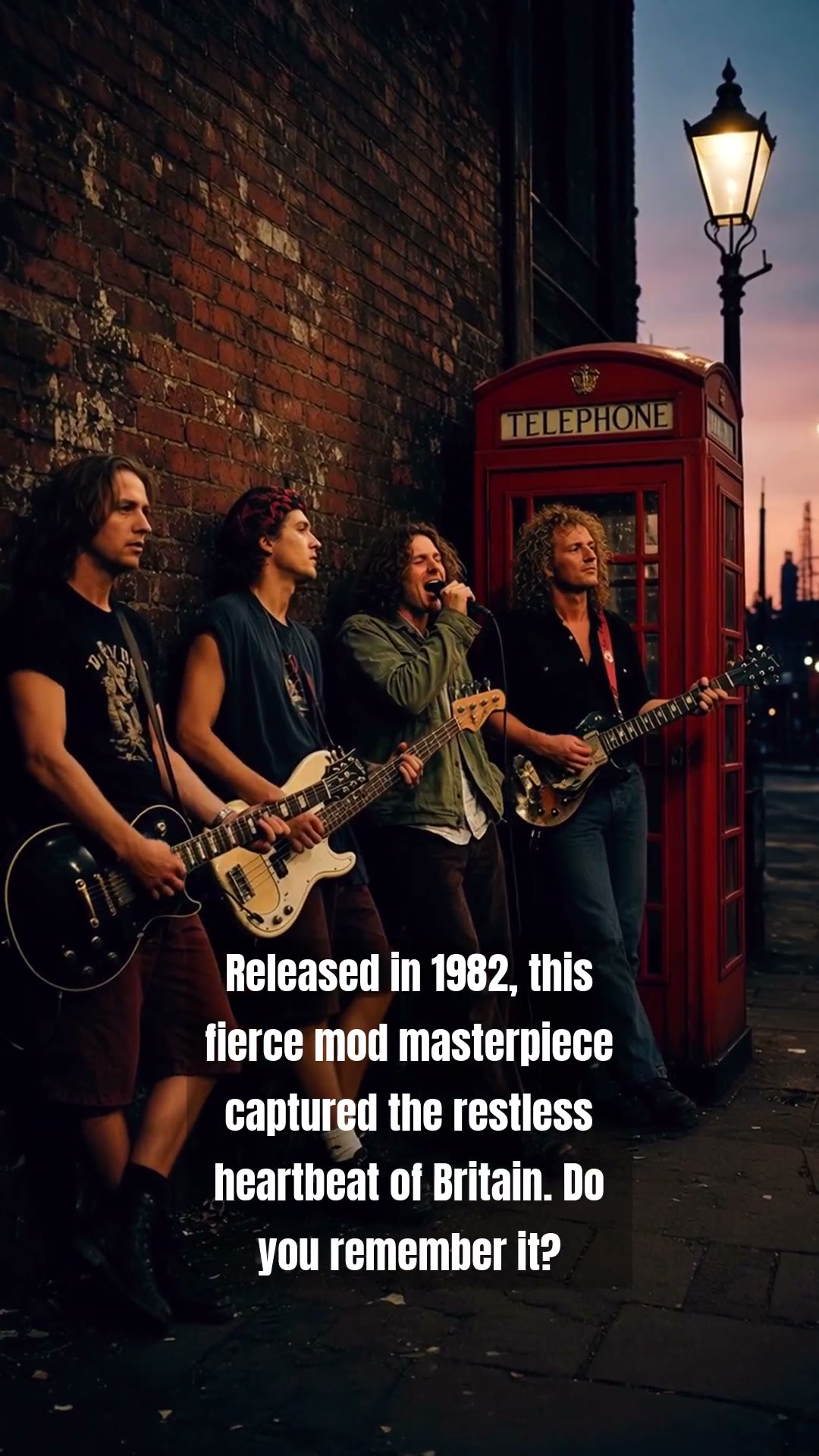
It was 1982, a year when the British skyline felt as grey as the headlines, and the nation was caught in a strange, restless flux. Tucked away in a humble flat, Paul Weller was busy stitching together a sound that would soon rattle the windows of every council estate from London to Glasgow. This was the birth of Town Called Malice, a track that didn’t just climb the charts; it hurtled straight to number one, carrying the frantic heartbeat of a generation that felt both trapped and defiant. For those of us huddled round the telly watching Top of the Pops that night, The Jam were not just another band; they were the voice of the sharp-suited, soul-obsessed youth.
To understand the magnitude of The Jam, one has to realise that they were more than just a trio with a penchant for skinny ties and Italian scooters. They were the architects of a Mod revival that felt authentic, visceral, and dangerously close to the bone. When that bassline first kicked in, inspired by the rhythmic pulse of Motown but injected with the jagged, nervous energy of the punk explosion, it felt like a collective release. The song was a sharp critique of post-industrial decline, a colourful yet bleak snapshot of life in the provinces that resonated deeply with anyone who had ever stared at the rain and dreamt of something more.
The genius of the record lay in its contradiction. It had the infectious bounce of a Northern Soul floor-filler, yet the lyrics were cutting and observant, picking apart the monotony of daily survival. Weller had a knack for documenting the ordinary with such startling clarity that you could almost smell the chip shops and the damp brickwork of the high street. It was a favourite for the disaffected, a soundtrack for the lads on the corner and the girls saving up for their next outfit, all united by the biting social commentary wrapped in a melody you couldn’t help but tap your feet to.
Looking back, it is staggering how much ground The Jam covered in such a short space of time. They were the bridge between the fury of 1977 and the sophisticated pop sensibilities that would dominate the mid-eighties. Their break-up shortly after this success remains one of the great tragedies of British music history, leaving fans to wonder what other masterpieces remained locked away in Weller’s notebook. They walked away at their absolute peak, leaving behind a legacy that felt complete, polished, and entirely their own.
Today, when that iconic intro drifts through a radio, it takes me right back to a world of smoky pubs and the clatter of bus wheels on wet tarmac. It reminds us of a time when music didn’t just entertain; it mattered. Whether you were there in the thick of it or you are just discovering their catalogue now, there is no denying that The Jam captured a specific, fleeting piece of our national soul. It is a timeless reminder of why we fell in love with music in the first place, and perhaps, a reason to dig out your old records and turn the volume up just one more time.