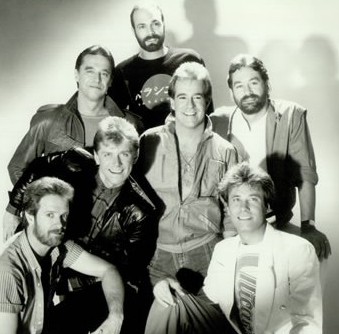
The year was 1982, and the airwaves were undergoing a seismic shift. The gritty, horn-heavy rock that had defined the 1970s was being pushed aside by the sleek, neon-soaked pulse of the new decade. For the legendary band Chicago, the transition was proving fatal. Their commercial viability was fading fast, leaving them stranded in the shadow of their former glory. Enter David Foster, a producer with an ear for perfection and a reputation for cold-blooded efficiency. He didn’t just want to produce an album; he wanted to reinvent the sonic identity of a generation. What followed was a studio decision so ruthless that it would ripple through the band’s legacy, securing a massive number-one hit while simultaneously lighting the fuse for a permanent fracture within the group.
David Foster knew exactly what the charts demanded in the early eighties: the clinical precision of synthesizers. To achieve that polished sheen, Foster made a move that shocked the band members to their core. He systematically silenced the iconic brass section that had been the heartbeat of Chicago since their inception. For a band built on complex horn arrangements and jazz-fusion roots, this was perceived as an act of artistic betrayal. The brass section was not just an instrument; it was their identity. Yet, Foster stood his ground, demanding they conform to the burgeoning pop aesthetic of the era. He pushed them toward a smoother, ballad-focused sound, prioritizing melody and radio-friendly synthesizers over the raw, brassy grit that had built their empire.
The result was the smash hit ‘Hard to Say I’m Sorry,’ a song that catapulted Chicago back to the top of the Billboard charts and introduced them to a new audience of MTV-watching youth. It was a commercial triumph, a phoenix rising from the ashes of a dying career. However, behind the closed doors of the recording studio, the atmosphere was thick with resentment. The members of the band felt like pawns in David Foster’s grand experiment. Every note played on those synthesizers felt like a direct hit to the soul of the group. While the song played on every Walkman in America, the internal structure of Chicago was cracking under the weight of this creative compromise.
This tension reached a boiling point that arguably never fully cooled. The decision to prioritize the producer’s vision over the band’s signature sound created a power imbalance that plagued their future collaborations. It was the quintessential tragedy of the era: the clash between artistic integrity and the suffocating pressure of mainstream success. David Foster had effectively traded the band’s unique heritage for a seat at the table of modern pop, a trade that the members would debate for decades to come.
Today, when we look back at the soundscape of the early eighties, we hear the undeniable brilliance of that production. It is a snapshot of a time when the Jukebox gave way to the synthesizer, and bands were forced to evolve or perish. Yet, the story of David Foster and Chicago serves as a poignant reminder of the cost of fame. Sometimes, the price of a number-one hit is the very thing that made the artist special in the first place. As the synthesizers fade and the nostalgia hits, one cannot help but wonder: was the cost of the fracture truly worth the gold on the wall?