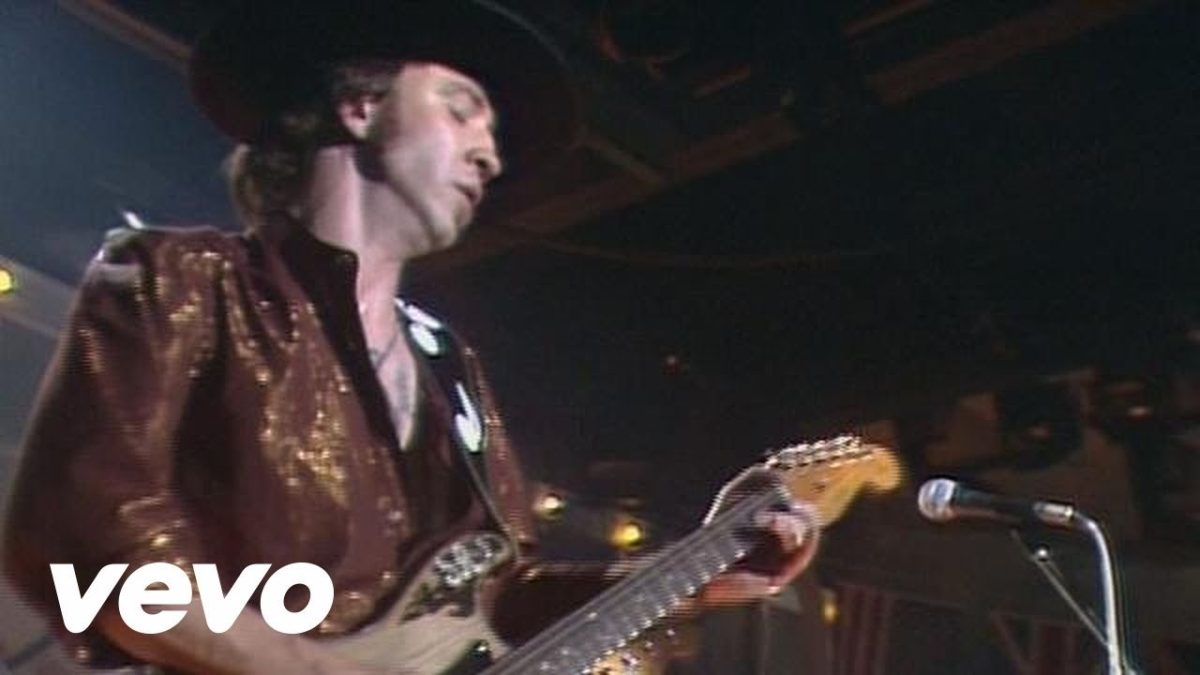
It was 1982, and the air inside the Montreux Jazz Festival was thick with an electric, almost dangerous tension. David Bowie, a man who had already reinvented himself a dozen times over, sat in the shadows of the audience, his eyes locked on a man tearing through a guitar solo that felt like a visceral, blues-soaked haunting. On that stage, Stevie Ray Vaughan was not just playing an instrument; he was channeling a primal energy that seemed to vibrate through the very floorboards. Bowie, who had spent his life hunting for the next sonic frontier, was frozen. He realized then that he was witnessing the birth of a legend, and he knew he had to capture that raw, soul-stirring intensity for his own upcoming record.
At the time, David Bowie was preparing for the era-defining shift that would become his 1983 masterpiece, Let’s Dance. While the world was busy dancing under the neon lights of the early eighties, Bowie craved the grit of the blues to ground his polished pop sensibilities. He walked up to Stevie Ray Vaughan after the set, an offer of collaboration hanging in the humid air. The Texan guitarist, who was still largely unknown to the global mainstream, was skeptical. He was a blues purist, a man of the Jukebox and the dive bar, yet the magnetic pull of the Thin White Duke was impossible to ignore. This unexpected alliance would bridge two worlds: the high-concept artifice of Ziggy Stardust and the earthy, sweat-drenched soul of the Texas blues tradition.
Stevie Ray Vaughan arrived at the studio with his battered Stratocaster, ready to inject a lethal dose of soul into the project. The result was the blistering, iconic guitar work found throughout the Let’s Dance album. The shimmering, funk-driven pop tracks were suddenly anchored by Vaughan’s aggressive, soulful bends and piercing riffs. It was a clash of cultures—the calculated chic of MTV-era stardom meeting the authentic, relentless fire of a man who played as if his life depended on it. For Stevie Ray Vaughan, it was a baptism by fire, an introduction to a global audience that would soon realize he was the greatest guitarist of his generation.
Yet, the collaboration was not without its shadows. The pressure of international stardom, the frantic pace of the industry, and the looming temptation of excess weighed heavily on the musicians of that era. Despite the massive success of the album, the partnership was brief and intense, a fleeting moment of lightning captured in a bottle. Vaughan would eventually walk away to pursue his own path, but the mark he left on Bowie’s legacy was permanent. It remains a testament to a time when rock and roll was still capable of producing these strange, beautiful collisions of talent.
Decades later, the haunting melody that first caught Bowie’s ear still echoes in the halls of music history. It reminds us of a time before the digital homogenization of sound, when a single live performance in a smoky venue could dictate the course of a legendary career. Stevie Ray Vaughan gave Bowie the blues, and in return, the world gained a snapshot of musical brilliance that refuses to fade. As we look back, we hear not just the notes, but the story of a man who walked into a room, played his heart out, and changed the trajectory of rock history forever.