
Daniel Lanois and the Shattered Guitar That Saved Bob Dylan’s Oh Mercy

The year was 1989. The humid, swampy air of New Orleans hung heavy over the studio where the legendary Bob Dylan was struggling to find his footing. Dylan, a voice of a generation, felt lost in the transition between the analog warmth of the past and the high-tech precision of the late eighties. Enter Daniel Lanois, the sonic architect and producer whose reputation for atmospheric, haunting textures was already legendary. Yet, even for a master like Daniel Lanois, the sessions for the album Oh Mercy were hitting a wall of creative paralysis that threatened to derail the entire project.

The tension in the studio was palpable, a suffocating mixture of artistic exhaustion and mounting frustration. Dylan was restless, unable to capture the visceral honesty his songwriting demanded. Daniel Lanois, known for his methodical approach and his intimate connection to his instruments, felt the magic slipping away. In a moment of raw, unvarnished human emotion that transcended the technical wizardry of the era, the producer did the unthinkable. Daniel Lanois grabbed his own beloved, cherished guitar—an instrument he held close to his heart—and smashed it against the studio floor, pieces of wood and wire clattering in the silence.

It was a startling, violent act of catharsis that shattered the deadlock. The sound of the destruction echoed through the room, serving as a jarring wake-up call that stripped away the pretense of the recording process. For a brief, breathless moment, the stiff atmosphere dissolved. Daniel Lanois had successfully broken the spell of perfectionism that was choking the music. The energy in the studio shifted instantly; the frustration was no longer a barrier but a source of power. They were no longer just making a record; they were exorcising the demons of expectation to reach the raw, authentic core of the songs.

Looking back from our modern era of sterile, digital production, the story of Daniel Lanois and his destroyed guitar serves as a poignant reminder of what true music requires: sacrifice and soul. In 1989, when the walkman was the king of portable music and the industry was obsessed with the shiny production values of synth-pop and glam metal, this act of raw rebellion stood out. It was a testament to the idea that a masterpiece isn’t always polished; sometimes, it must be broken to be fully revealed. The resulting album, Oh Mercy, remains one of the most haunting and critically acclaimed works of Dylan’s long career, defined by that very grit.

The legacy of Daniel Lanois lies not just in his technical genius but in his willingness to inhabit the fire of creation. He understood that music is a fragile, living thing that sometimes demands a sacrifice to breathe again. As we listen to those timeless tracks today, we aren’t just hearing the polish of a master producer; we are hearing the reverberations of a moment where art won over ego. Sometimes, to create something that lasts forever, you have to be willing to destroy what you love most. It remains a legendary piece of music history that reminds us all why we fell in love with rock and roll in the first place.
The Tragic Success of Falco: Why Rock Me Amadeus Brought Terror

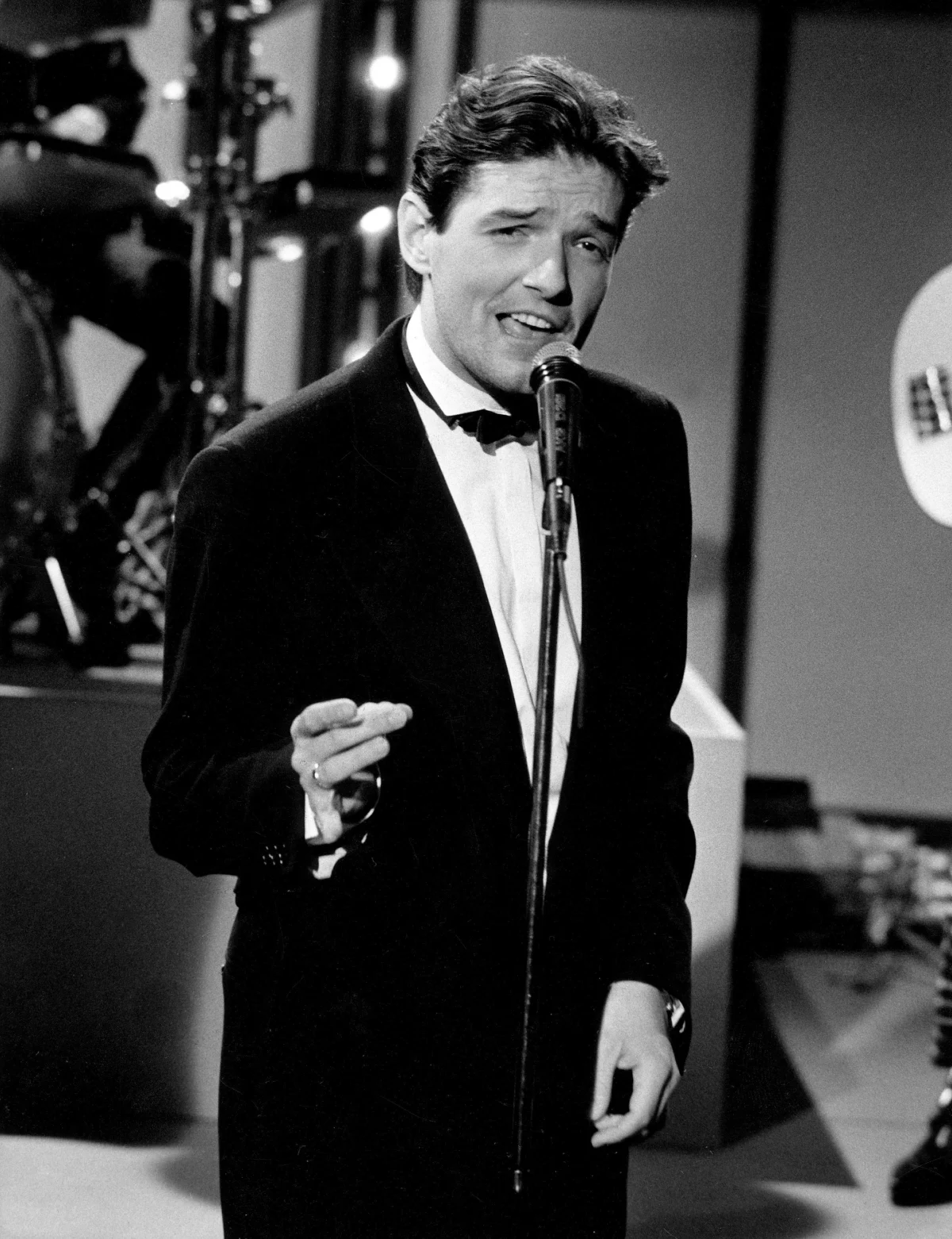
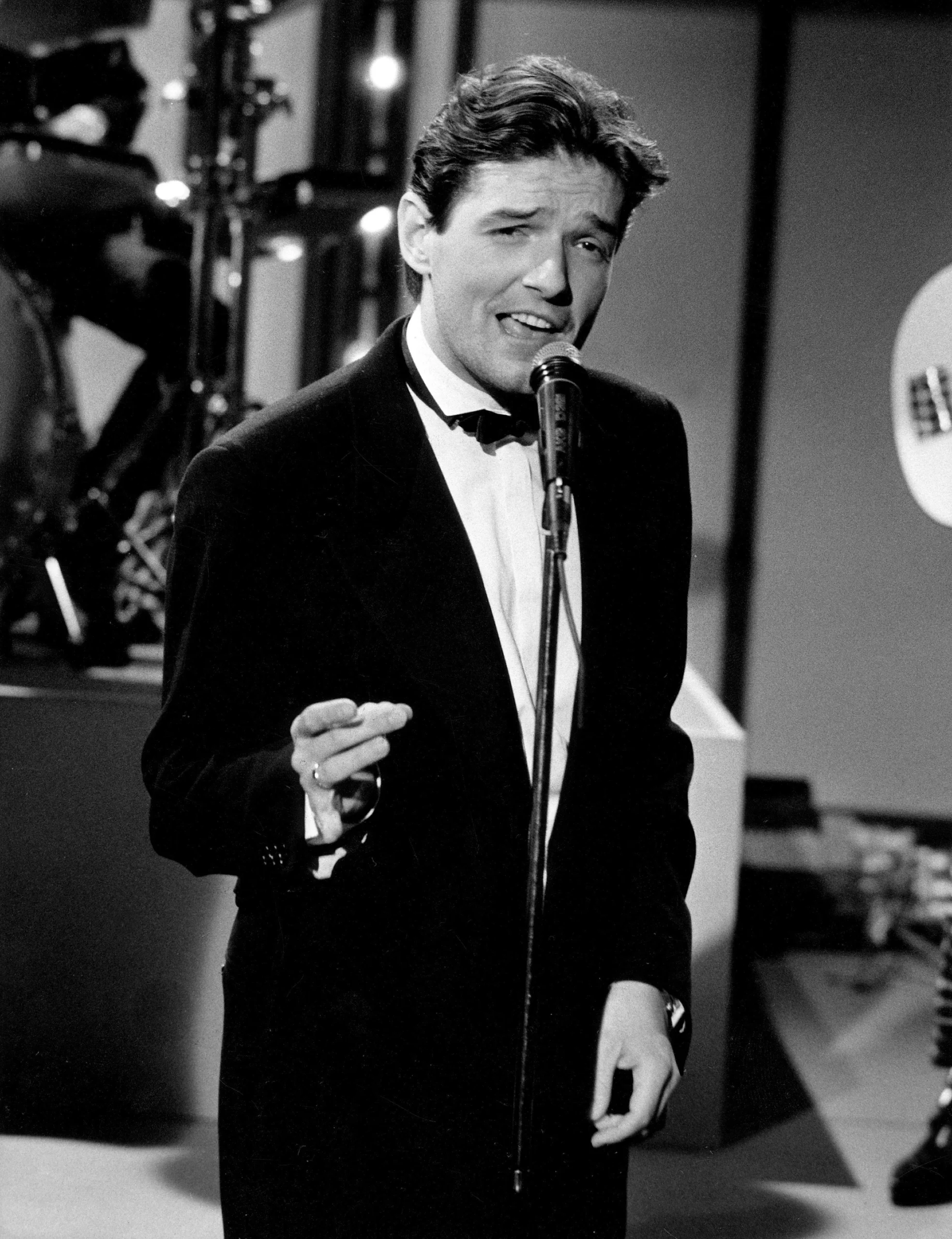
In 1986, the airwaves were dominated by the neon pulse of the synth-pop revolution, and MTV was the undisputed king of musical discovery. Amidst this colorful landscape, a charismatic Austrian named Falco achieved the impossible. His hit single Rock Me Amadeus climbed to the top of the Billboard Hot 100, marking the first time a German-language song had ever reached the summit of the American charts. While the world danced to its infectious, orchestral-meets-hip-hop beat, the man behind the microphone was not popping champagne. Instead, Falco was paralyzed by a chilling, existential panic. He realized with terrifying clarity that he had reached the absolute peak of the mountain, and there was nowhere left to go but down.

To understand the gravity of his fear, one must look at the meteoric rise of Johann Hölzel, the man the world knew as Falco. He was an artist who embodied the decadence and artistic hunger of the mid-eighties. He thrived in the smoke-filled, high-stakes environments of European clubs and recording studios, where the line between genius and self-destruction was often blurred. Rock Me Amadeus was his masterpiece, a bold blend of Mozartian grandeur and street-smart swagger. Yet, for Falco, the massive triumph felt less like a victory lap and more like a closing door. He knew the fickle nature of the music industry better than anyone; he understood that superstardom is a fragile house of cards waiting for the slightest breeze to knock it over.

Behind the glitz of the Walkman era and the polished perfection of music videos, Falco wrestled with the classic tragedy of the golden-age performer. The pressure of maintaining his persona became an exhausting weight. He was a pioneer, blending genres in a way that felt rebellious and fresh, yet the more success he garnered, the more alienated he felt from his true self. He feared becoming a caricature, a one-hit wonder frozen in the amber of a single chart-topping year. This internal conflict defined his later years, creating a haunting contrast between the public image of an arrogant pop star and the private reality of a man losing his grip on his own identity.

History remembers the beat of Rock Me Amadeus as a soundtrack of the decade, but fans of nostalgic music history recognize it as a siren song. It is a cautionary tale about the dark side of fame, a reminder that the loudest applause often echoes in a very lonely room. Falco ultimately became a prisoner of his own legacy, a figure whose life turned into a tragic narrative of what happens when the ascent is too fast and the descent is too steep to control.

Even today, his music remains a testament to the bold, experimental spirit of the eighties. Whenever that familiar, driving tempo begins, we are transported back to a time of vibrant neon and unbridled ambition. We remember Falco not just for his chart-topping records, but for the raw, human vulnerability he hid behind his sharp suits and sunglasses. He lived the dream that every musician craves, only to find that the nightmare was waiting right beside it. As we listen to his catalog today, we are invited to look past the production value and see the man who dared to challenge the world, even when he knew the cost of his ambition would be his own peace of mind.

The Haunted Midnight Demo: How Crowded House Almost Lost Don’t Dream It’s Over

It was 1986, and the world was changing. The neon pulse of MTV was beginning to dictate the rhythm of our lives, and the cassette deck in every Walkman was hunger for the next big sound. In a dimly lit studio, exhausted by the grinding pressure of their debut album, Neil Finn of Crowded House sat hunched over a piano. It was past midnight, and the air was thick with the scent of stale coffee and creative desperation. In that quiet, vulnerable moment, the skeleton of a song emerged—a haunting melody that would eventually define a generation. Yet, for a terrifying moment, the band nearly threw it into the trash, failing to see the masterpiece they had just birthed.

At the time, the members of Crowded House were outsiders navigating the cutthroat landscape of the international music industry. They were exhausted, homesick, and struggling to find their sonic identity. The song, which would become known as Don’t Dream It’s Over, was almost relegated to the scrap heap of history. It was too soft, too different, and far removed from the high-octane rock anthems that dominated the charts of the mid-eighties. The band members honestly believed it didn’t fit the vision they had curated for their first record. It is a chilling reminder of how close some of our most beloved cultural cornerstones came to never existing at all.

When you listen to the song today, it acts as a time capsule. The shimmering synths and Neil Finn’s soul-baring vocals instantly transport you back to an era where the world felt simultaneously larger and more intimate. It wasn’t just a track; it was a sentiment. As the song hit the airwaves, it caught fire, becoming a global anthem that defined the late eighties. It spoke to a sense of longing and perseverance that resonated across continents, soundtracking countless road trips, first loves, and midnight heartbreaks. It became the song you played when you wanted to feel something profound.

The genius of the track lies in its simplicity and the raw, unpolished emotion of that initial midnight demo. Unlike the overly produced pop hits that were the hallmark of the MTV era, this song felt human. It felt like a confession. The way the lyrics weave through themes of isolation and unity captures the specific tension of the decade. By the time it topped the charts, Crowded House had transformed from a weary, unknown band into international legends. They had inadvertently tapped into a universal frequency that connected with millions of listeners who were all searching for a little bit of sincerity in a world of manufactured glamour.

Looking back, it is impossible to imagine the pop landscape without that iconic, melancholy piano intro. It serves as a testament to the fact that even in the height of commercial excess, true artistry finds a way to survive. The story of Crowded House is a reminder that the most significant moments in history are often born from the quietest, most desperate hours. We are lucky they chose to share that midnight secret with us, ensuring that we never stopped dreaming it was over. Next time the song plays, listen closely for the echoes of that long, exhausted night, and you will hear exactly why it remains a timeless piece of our collective memory.

The Night Ted Templeman Discovered Eddie Van Halen in a Neon Club

The year was 1977. The Sunset Strip was a simmering pot of ambition, sweat, and cheap beer, long before the era of neon-drenched MTV dominance turned rock stars into gods. Inside a nearly empty, dingy club, the air hung heavy with the smell of stale cigarettes and the restless energy of a band playing to almost nobody. Among the few stragglers was Ted Templeman, a producer with a golden ear and a reputation for spotting lightning in a bottle. As he leaned against the sticky bar, he wasn’t expecting to witness a shift in the tectonic plates of music history. Then, the guitarist stepped up, plugged in, and proceeded to tear the roof off the building.

That guitarist was Eddie Van Halen. To those in the room, it felt less like a performance and more like an exorcism of musical norms. Ted Templeman recalls being frozen in place, watching Eddie Van Halen navigate the fretboard with a speed and melodic intuition that simply did not exist in the dictionary of 1970s rock. It wasn’t just the technical wizardry; it was the sheer, unbridled joy emanating from his playing. In that flickering club light, Templeman knew he wasn’t just hearing a local act; he was witnessing the birth of a new sonic vocabulary that would eventually define an entire decade.

Before that pivotal night, the rock scene was beginning to feel stagnant, caught between the tail end of blues-rock grit and the looming, polished sheen of the eighties. Eddie Van Halen brought a chaotic, high-voltage energy that acted as a bridge. Under the guidance of Ted Templeman, who would go on to produce the band’s earth-shattering debut album, the raw intensity of those club nights was bottled and unleashed upon the world. They traded the claustrophobic atmosphere of the Strip for the massive soundscapes that would soon echo from every car stereo and Walkman across America.

Yet, the beauty of the story lies in that humble, nearly empty setting. It serves as a reminder that even the greatest legends started in the shadows, fueled only by the audacity of their talent. Eddie Van Halen didn’t need the pyrotechnics or the massive stadium crowds yet; he only needed a guitar and a producer who recognized that the rules were meant to be broken. That moment in 1977 captured the essence of the dream: the collision of talent, opportunity, and the grit required to make something timeless.

Decades later, the legacy of that discovery remains as potent as ever. We still look back at the Eddie Van Halen revolution as the moment guitar music evolved into a language of pure adrenaline. It was the precursor to the excesses of glam metal and the technical benchmarks that every subsequent guitarist would try, and often fail, to reach. As we listen to those classic tracks today, we aren’t just hearing music; we are hearing the echo of a man who changed the world in a room where nobody was watching. And for that, we remain forever nostalgic for the magic that Ted Templeman first heard in the dark.