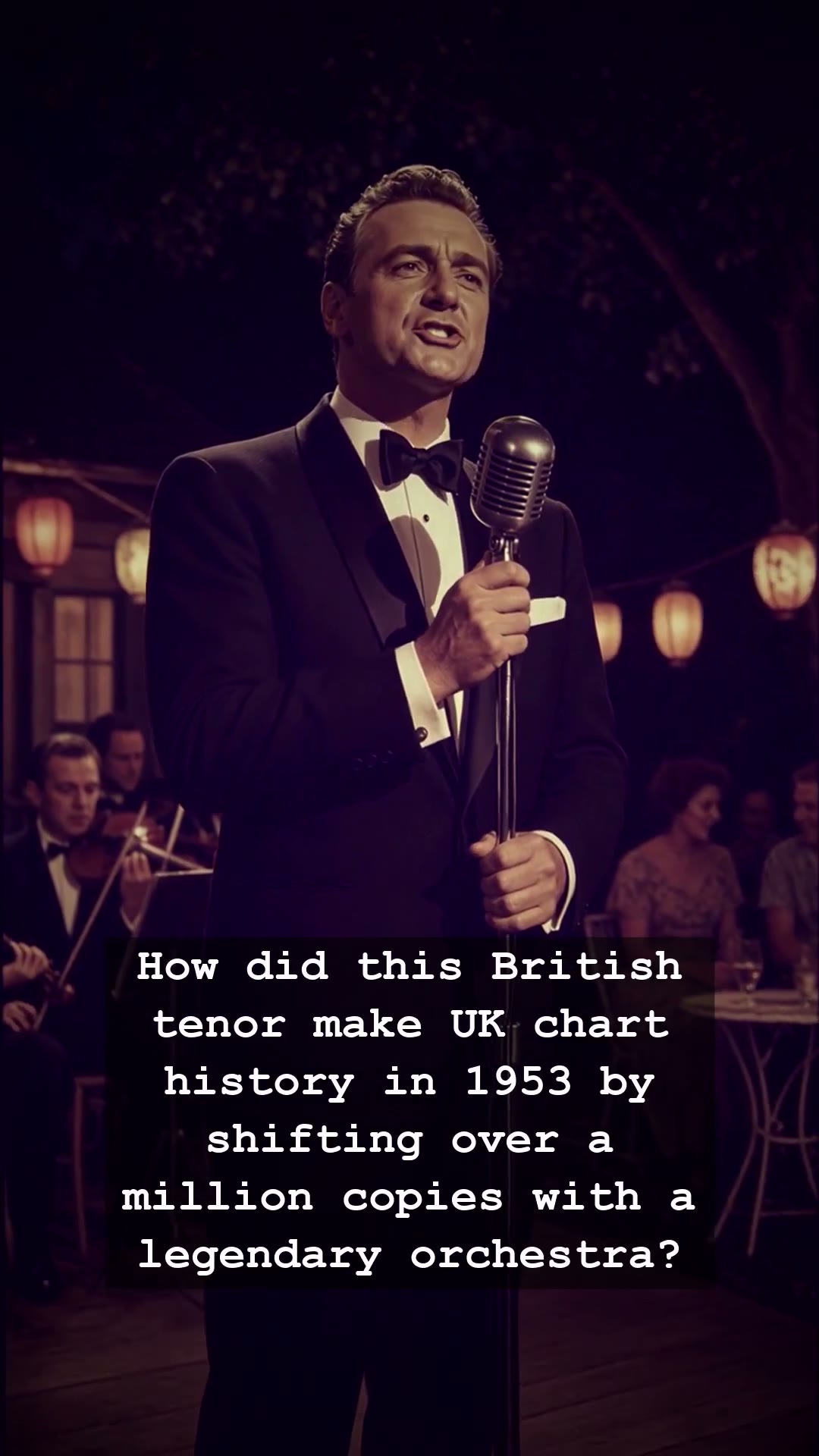
Picture the grey, austere streets of post-war Britain in 1953, where the nightly glow of the telly was still a luxury for the few and the wireless ruled the front parlour. In this drab monochrome world, a humble coal miner turned sensational balladeer named David Whitfield did something utterly astonishing. He didn’t just top the hit parade; he completely rewrote the history books of British popular music by becoming the very first homegrown artist to shift over a million copies of a single record. It was a dizzying triumph that sent shockwaves through the nascent British music industry long before the swinging sixties or the arrival of rock and roll shook the nation’s foundations.
The magic behind this unprecedented feat was a stroke of genius born from teaming up with the legendary Mantovani Orchestra. Mantovani, the Italian-born maestro of easy listening, possessed a shimmering, cascading string arrangement style that could turn any melody into an emotional epic. When David Whitfield stepped up to the microphone with that rich, soaring tenor voice, the resulting sound was pure liquid gold. Their fateful collaboration captured the romantic yearnings of a weary public desperate for a bit of colour and escapism in their everyday lives. Every note felt like a warm embrace on a chilly London evening.
The track that achieved this monumental million-selling status was Answer Me, a hauntingly beautiful ballad that resonated deeply across the British Isles. Families gathered around their wireless sets, completely spellbound as David Whitfield poured his entire soul into the aching lyrics. It was the kind of heartfelt performance that instantly commanded total silence in bustling local boozers and quiet suburban living rooms alike. Overnight, David Whitfield went from an ordinary working-class bloke to a household favourite whose posters graced the bedroom walls of star-struck teenagers up and down the country.
Yet, the relentless pressure of sudden superstardom brought its own quiet tragedies and hidden storms, as it so often does in the glittering world of showbiz. The frantic touring schedule, the endless BBC radio sessions, and the sheer weight of expectation eventually began to take a heavy toll on David Whitfield. Critics could be fiercely cynical, and the musical landscape was shifting beneath his feet with the terrifying speed of a fresh youth culture waiting in the wings. But for a brief, glorious moment in the early nineteen-fifties, he was the undisputed king of the British charts.
Looking back from our hyper-connected modern era, it is remarkably easy to forget just how monumental a million sales truly was back then. There were no digital streaming algorithms or instant downloads; every single copy represented a hard-earned physical purchase from a local record shop. David Whitfield achieved his legendary status through pure vocal power and genuine emotional resonance, rather than clever marketing gimmicks or manufactured hype. He proved that a working-class lad with an extraordinary gift could capture the collective heartbeat of an entire nation.
Decades have drifted by since those heady days of 1953, yet the sublime recordings of David Whitfield and the Mantovani Orchestra still retain their timeless, nostalgic charm. Whenever those lush, cascading strings swell up on a crackling vintage wireless, we are instantly transported back to a simpler, more innocent era of British musical history. It is a fitting tribute to a forgotten titan of the golden age of British balladry, a man who dared to dream big and forever left his indelible mark upon the UK charts.