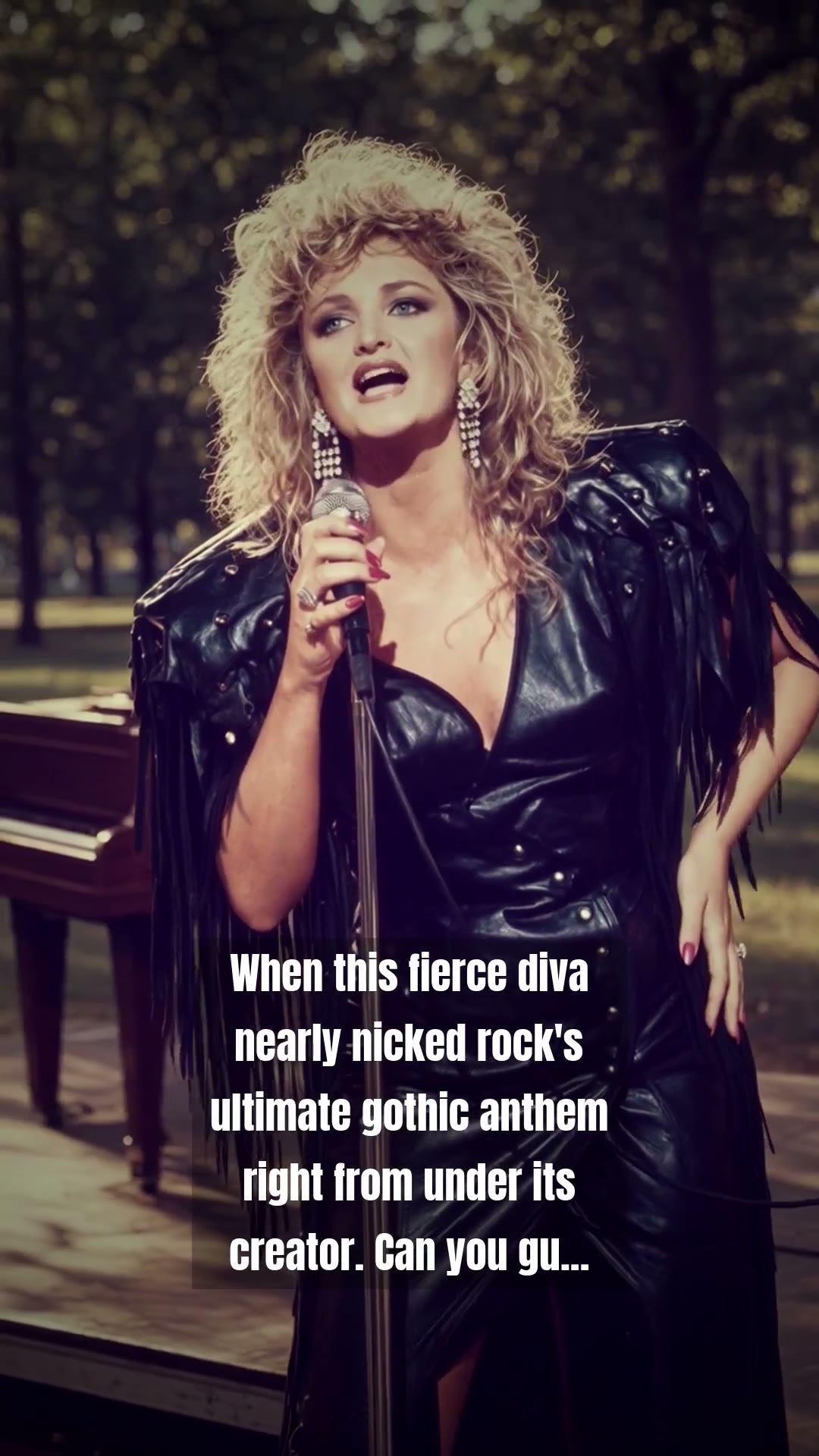
It was 1983, and the airwaves across Britain were changing. The synth-pop revolution was in full swing, yet amidst the neon and plastic, a gothic, operatic behemoth was lurking in the shadows of a New York studio. Most music fans realise that Total Eclipse of the Heart is the quintessential power ballad, but the story behind its creation is as dramatic as the lyrics themselves. While we associate the track with the raspy, soul-stirring pipes of Bonnie Tyler, the song was originally intended for a very different beast: the theatrical force of nature known as Meat Loaf.
Jim Steinman, the eccentric genius behind the Bat Out of Hell sound, had penned the track as a follow-up to his collaboration with Meat Loaf. The drama began when the singer’s management allegedly refused to pay for the song, leaving Steinman in a bit of a pickle. Enter Bonnie Tyler, a Welsh powerhouse who was looking to reinvent her sound and shake off her country-rock shackles. When she heard the demo, she knew she had found something special. It was a proper masterpiece, dripping with enough melodrama to make even the most stoic listener shed a tear in front of the telly.
When Bonnie Tyler entered the studio, the atmosphere was thick with tension. Execs were genuinely terrified that this raspy diva was biting off more than she could chew. The track was gargantuan, a sprawling gothic epic that demanded everything from the vocalist. Yet, as soon as she opened her mouth, the studio went silent. She didn’t just sing the song; she colonised it. With that signature grit—the result of a recent surgery that had left her voice permanently weathered—she brought an authentic, raw human emotion that Meat Loaf, for all his theatrical flair, might have struggled to capture in quite the same way.
It is one of those ‘what if’ moments in British music history that makes the heart race. Imagine the iconic video, with its moody schoolboys and glowing eyes, featuring the high-octane energy of Meat Loaf instead of Bonnie Tyler’s haunting vulnerability. The song soared to the top of the UK charts, becoming a firm favourite at every local pub lock-in and school disco. It proved that a song’s soul isn’t just in the composition, but in the person who breathes life into it. The colour and shade she added to the track turned a studio demo into an immortal anthem.
Even today, four decades on, hearing that opening piano chord transports us back to a time when pop music wasn’t afraid to be a bit unhinged. It remains a staple of our cultural fabric, a testament to the fact that sometimes, the best decisions happen by pure accident. Bonnie Tyler took a song that was never meant for her and turned it into the definitive soundtrack of a generation. Whenever that chorus kicks in, we are all transported back to the magic of 1983, reminding us why we fell in love with rock and roll in the first place.