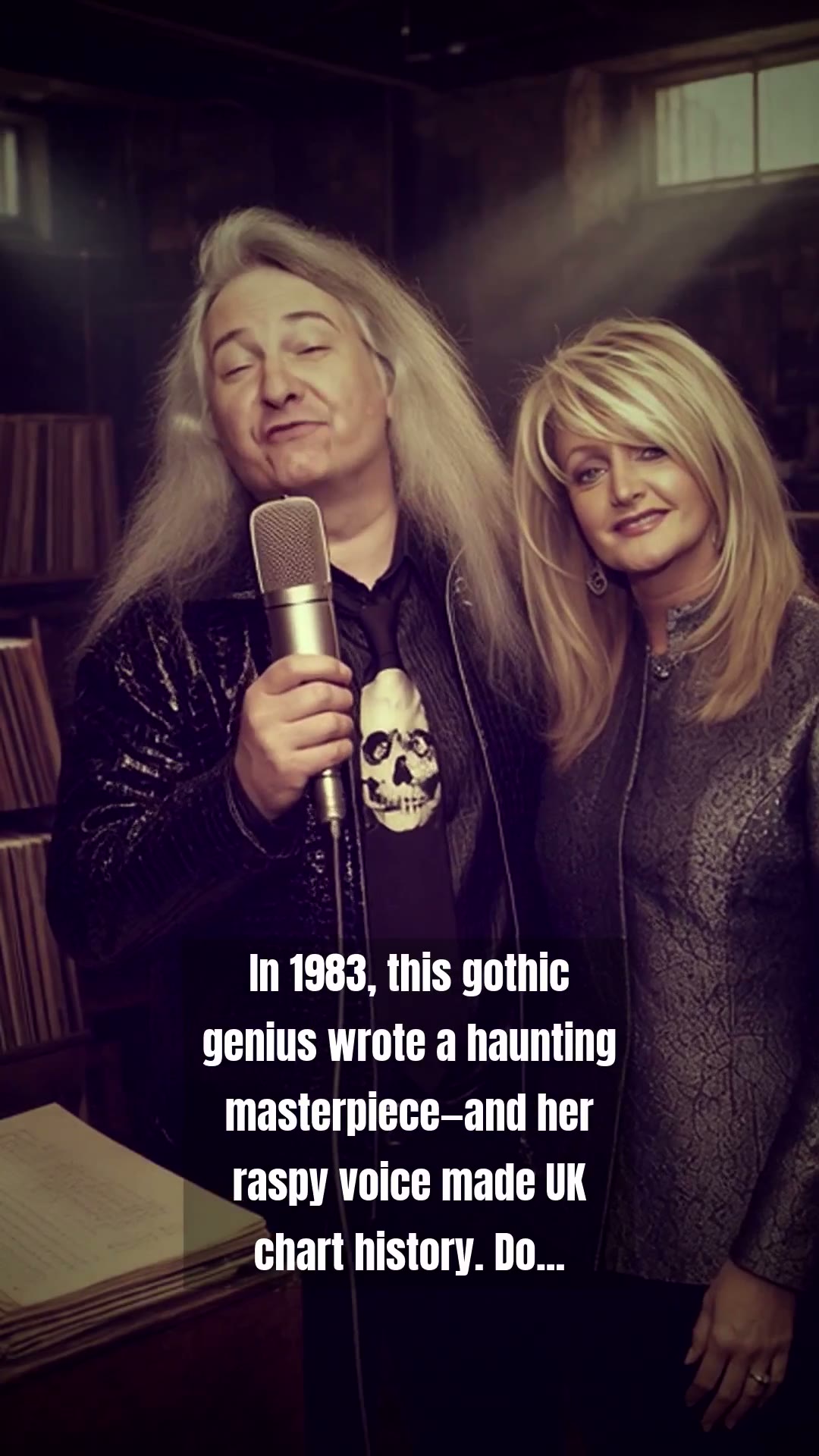
It was 1983, and the British airwaves were undergoing a peculiar transformation. We had grown accustomed to the polished synthesizers of the New Romantics, but then came a sound that felt like a gothic storm breaking over a sleepy, rain-drenched London. Jim Steinman, a man whose imagination lived in the shadows of Wagnerian opera and late-night melodrama, had locked himself in a studio to craft a piece of music so expansive it defied the logic of the charts. When he handed his haunting orchestral epic to the Welsh powerhouse Bonnie Tyler, the result was nothing short of miraculous. Her raspy, soul-drenched voice didn’t just sing the song; it tore through it, transforming a ballad into an emotional earthquake that captured the hearts of a nation.
Bonnie Tyler was not your typical pop star of the era. She possessed a raw, weathered edge that felt entirely authentic, a sharp contrast to the manufactured sheen found on the Top of the Pops set. When Total Eclipse of the Heart hit the airwaves, it felt as though the very fabric of British music had shifted. The song was grandiose, over-the-top, and utterly brilliant. It was the sort of track that made you stop what you were doing, turn up the telly, and simply listen as the drama unfolded, building from a quiet whisper into a thunderous, heart-wrenching crescendo that seemed to echo through every terrace house in the country.
Jim Steinman was the gothic genius behind the madness, a man who saw no limit to what a pop song could achieve. He wanted the track to sound like a fever dream, and he realised that only Bonnie Tyler could inject that necessary grit to ground his high-flown ambition. The collaboration was a perfect match of theatricality and grit. It is a story often told in local pubs that the recording session felt more like an intense, cinematic ordeal than a standard day in the studio. They weren’t just making a hit record; they were crafting a piece of history that would define the mid-eighties for anyone who lived through it.
Even today, the song retains its original power, refusing to fade into the background. Perhaps it is because of the stark honesty in Bonnie Tyler’s delivery or the way Jim Steinman’s composition mirrors the messy, beautiful contradictions of love. It remains a staple of our collective memory, a reminder of a time when songs were allowed to be long, loud, and unapologetically dramatic. It did not matter if you were caught in a traffic jam on the M25 or relaxing in your favourite armchair at home, those opening piano notes still possess the same capacity to stir the soul.
We often look back at the eighties as an era of bright colours and neon lights, but the success of this track proves there was always a darker, deeper undercurrent at play. Bonnie Tyler and Jim Steinman reminded us that music is at its best when it dares to be vulnerable and grand all at once. As the final notes fade, one cannot help but realise that some magic simply never loses its lustre, no matter how many decades go by. Do you remember where you were when you first heard it?